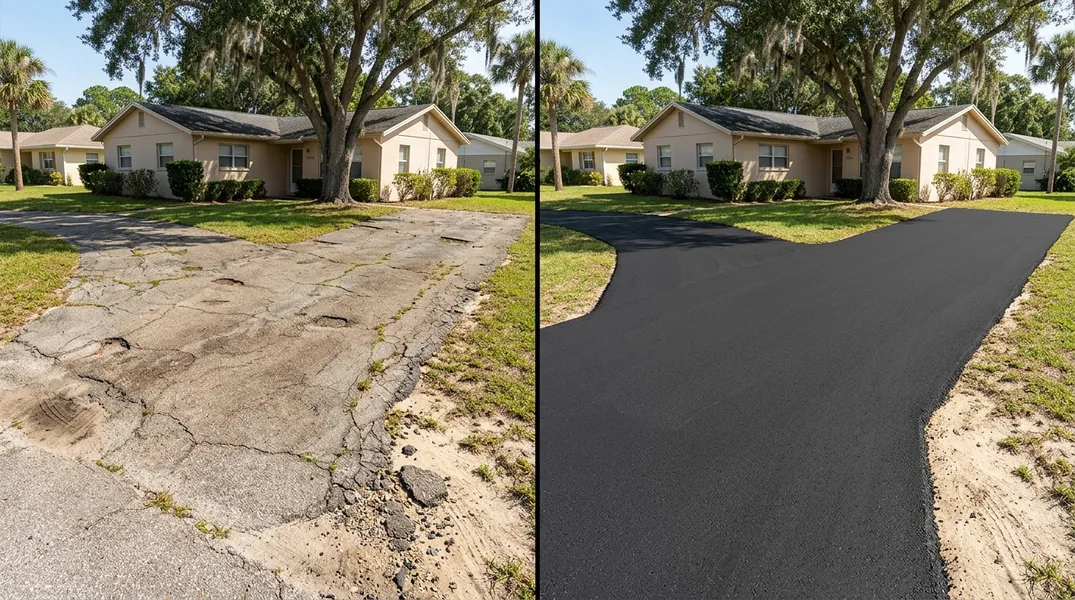
Signs Your Driveway Needs More Than a Quick Fix
Your driveway is one of the hardest-working surfaces on your property. In Daytona Beach, where heat, humidity, and salt air take their toll, it's easy for small problems to spiral into major damage. The question every homeowner eventually faces is simple: do I repair this, or is it time for a full replacement?
Minor cracks and small potholes are usually candidates for Driveway Repair or Pothole Repair & Asphalt Patching. These targeted solutions are cost-effective and can extend your driveway's life by several years. However, if you're seeing widespread cracking, large sections of missing asphalt, or a surface that feels unstable underfoot, replacement or Asphalt Resurfacing & Overlay may be the smarter long-term investment.
The key is catching problems early. A driveway that's been neglected for years will deteriorate faster, and what started as a $500 repair can become a $5,000 replacement project. Understanding the difference between cosmetic damage and structural failure is your first step toward making the right call.
How Long for Asphalt to Cure: What New Driveways Need
If you've recently invested in Asphalt Driveway Paving & Installation, patience is essential. One of the most common questions homeowners ask is how long for asphalt to cure. The answer depends on several factors, including weather, thickness, and traffic conditions.
In ideal conditions, asphalt begins to harden within 24 to 48 hours. However, full curing typically takes 30 to 60 days. During this curing period, the asphalt continues to harden and bond with the underlying base layer. In the Florida heat, curing can sometimes accelerate, but that doesn't mean your driveway is ready for heavy use right away.
Temperature and humidity play significant roles in the curing timeline. Cooler weather slows the process, while the intense heat of Daytona Beach summers can speed it up. However, even on hot days, you should avoid parking heavy vehicles on newly paved asphalt too soon. Premature loading can cause permanent deformation and reduce the lifespan of your driveway.
How Long Before You Can Drive on New Asphalt: A Safe Timeline
So how long before you can drive on new asphalt? The short answer is that you can typically drive on it lightly after 24 to 48 hours, but you should avoid parking heavy vehicles or making sharp turns during the first week. This is especially important in Florida's climate, where heat can soften asphalt faster than in cooler regions.
During the first 7 to 10 days, limit traffic to light vehicles and avoid parking in the same spot repeatedly. No heavy trucks, no backing up, and no spinning tires. After two weeks, most driveways can handle normal passenger vehicle traffic without issue. However, you should still avoid parking heavy equipment or commercial vehicles until the full 30 to 60 day curing window has passed.
If you're unsure about your specific driveway's readiness, contact Daytona Beach Asphalt Paving at (386) 267-8085. Our team can assess your installation and give you personalized guidance based on the weather conditions and the specific materials we used for your project.
New Asphalt Driveway Care: Protecting Your Investment
Once your new driveway has fully cured, proper maintenance becomes your best defense against premature deterioration. New asphalt driveway care starts with understanding what your surface needs to stay strong and attractive for years to come.
The first rule of new asphalt maintenance is keeping it clean. Sweep regularly to remove dirt, leaves, and debris that can trap moisture. Avoid using harsh chemicals or high-pressure washers during the first year, as these can damage the surface before it fully hardens. Instead, use a gentle spray and a soft brush for spot cleaning.
The second critical step involves protecting your investment from the elements. UV rays, water infiltration, and chemical exposure all contribute to asphalt breakdown. This is where sealing becomes essential. Most new driveways benefit from an initial seal coat applied 30 to 90 days after installation, once curing is complete. This protective layer shields the asphalt from oxidation and water damage, significantly extending its lifespan.
You should also address spills immediately. Oil, gasoline, and other fluids can soften asphalt and create permanent stains. Clean up spills promptly with absorbent materials, then treat the area with a degreaser if needed. With consistent care, your new driveway will maintain its appearance and structural integrity far longer than one that's neglected.
How Often to Seal Driveway: A Maintenance Schedule for Florida
Understanding how often to seal driveway is crucial for homeowners in Florida. The state's intense sun, humidity, and occasional salt spray create harsh conditions that accelerate asphalt deterioration. Most experts recommend sealing your driveway every 2 to 3 years, but Florida's climate may warrant more frequent applications.
The first seal coat should be applied 30 to 90 days after your new driveway is installed, once the asphalt has fully cured. After that, plan for a seal coat every 2 to 3 years, or sooner if you notice the surface beginning to fade or lose its glossy appearance. In high-traffic areas or driveways exposed to significant sun, you might seal every 18 to 24 months instead.
The cost of regular sealing is minimal compared to the expense of repairs or replacement. A seal coat typically costs a fraction of what you'd spend on patching or resurfacing, yet it can add years to your driveway's life. If you're unsure whether your driveway is due for sealing, our team can evaluate its condition and recommend the best course of action. Reach out to us for a free estimate on sealing services.
Seasonal changes also affect sealing schedules. Florida's rainy season can be particularly hard on unsealed asphalt, so applying a seal coat before summer or fall is often a smart preventive move. By staying ahead of deterioration with regular sealing, you'll keep your driveway looking new and functioning well for decades.
Repair vs. Replace: Making the Right Decision for Your Budget
The decision to repair or replace your driveway ultimately comes down to the extent of damage, the age of the surface, and your budget. If your driveway is less than 10 years old and shows isolated damage, repair is usually the right choice. If it's 15 to 20 years old and showing widespread deterioration, replacement or resurfacing makes more financial sense.
Consider the total cost of ownership. A single pothole repair might cost $150 to $300, but if you're patching multiple areas every year, you're spending money without solving the underlying problem. At that point, Asphalt Resurfacing & Overlay or full replacement becomes more economical. A resurfacing project typically costs less than a complete replacement and can add 7 to 10 years to your driveway's life.
The best way to understand your options and their costs is to get a professional assessment. Every driveway is unique, and what works for one property may not be ideal for another. Contact Daytona Beach Asphalt Paving at (386) 267-8085 to schedule a consultation, or request a free estimate online. Our experienced team will evaluate your driveway's condition and recommend the most cost-effective solution for your situation.
Looking for a professional asphalt paving contractor in Daytona Beach? Daytona Beach Asphalt Paving responds fast for all your asphalt paving needs.
Get a Free Quote