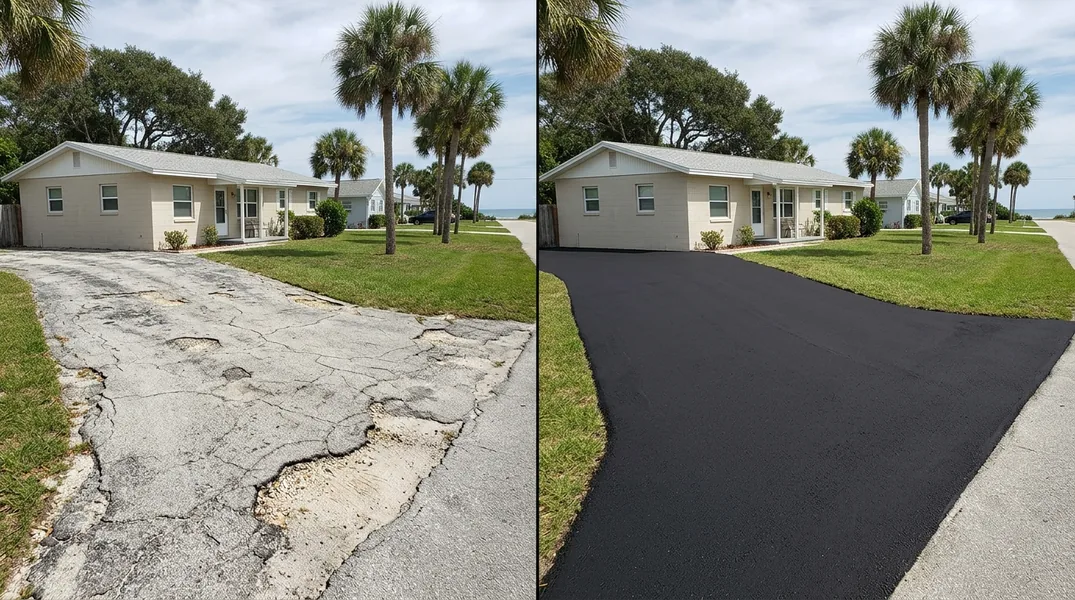
Understanding Asphalt Driveway Lifespan in Daytona Beach
If you own a home in Daytona Beach, you know that the coastal climate presents unique challenges for your property. The combination of intense Florida sunshine, salt air from the Atlantic Ocean, and frequent temperature fluctuations creates an environment that can be particularly tough on asphalt driveways. Understanding how long an asphalt driveway lasts in these conditions is essential for planning maintenance and budgeting for eventual replacement.
Under ideal conditions with proper maintenance, a typical asphalt driveway can last between 15 to 20 years. However, in Daytona Beach's climate, you may find that your driveway's lifespan is on the shorter end of that spectrum, or even less. The ultraviolet rays from our relentless Florida sun oxidize the asphalt binder, causing it to become brittle and lose its flexibility. Meanwhile, the salt air accelerates corrosion and weakens the asphalt structure from within. These environmental stressors work together to reduce the effective lifespan of your investment, making it crucial to understand the specific factors that affect durability in our area.
How Sun and Salt Air Damage Your Asphalt Driveway
The primary enemy of asphalt in coastal Florida is ultraviolet radiation. Daytona Beach receives an average of over 250 days of sunshine per year, which means your driveway is constantly exposed to intense UV rays. These rays break down the petroleum binder that holds the asphalt aggregate together, causing the surface to fade from black to gray and become increasingly brittle. Once the asphalt loses its flexibility, it becomes prone to cracking, which allows water to penetrate the surface and reach the base layers beneath.
Salt air presents an equally serious threat. The salt spray that drifts inland from the ocean doesn't just affect metal surfaces, it also infiltrates the porous asphalt material. This salt accelerates the deterioration of the asphalt binder and can corrode any reinforcing materials or metal components in the driveway structure. Additionally, salt lowers the freezing point of water, which might seem less relevant in Florida, but during the rare cold snaps in winter, this combination can cause rapid freeze-thaw cycles that crack and break apart the asphalt surface. The combination of these two factors means that driveways in Daytona Beach deteriorate faster than those in inland areas with similar usage patterns.
Signs Your Driveway Needs Repair or Replacement
Knowing when to replace your asphalt driveway is just as important as understanding how long it should last. Early warning signs include small cracks, fading color, and areas where the surface feels rough or splintered. If you notice these issues, you may benefit from Driveway Repair services to extend the life of your driveway. Addressing minor damage early can prevent more serious problems from developing and can add years to your driveway's usable life.
As your driveway ages, you may notice larger cracks, potholes, or areas where the surface is separating from the base. These are signs of more advanced deterioration. Pothole Repair & Asphalt Patching can address isolated problem areas, but if damage is widespread across your driveway, patching may only provide a temporary solution. When cracks cover more than 25 percent of the surface area, or when you see alligator cracking (a pattern of interconnected cracks resembling an alligator's skin), replacement is typically the most cost-effective option. Additionally, if your driveway has become uneven or is causing water to pool in certain areas, these are clear indicators that the structural integrity has been compromised.
Extending Your Driveway's Lifespan with Proper Maintenance
While Daytona Beach's climate will eventually take its toll on any asphalt driveway, proper maintenance can significantly extend its usable life. The most important maintenance step is regular sealcoating, which creates a protective barrier against UV rays and salt air. Sealcoating should be applied every two to three years in our coastal environment, more frequently than in inland areas. This simple preventive measure can add five to ten years to your driveway's lifespan by protecting the asphalt binder from oxidation and water infiltration.
Beyond sealcoating, regular cleaning removes salt deposits and debris that can trap moisture against the asphalt surface. Filling small cracks promptly prevents water from reaching the base layers, where it can cause extensive damage. Avoiding heavy loads and sharp objects, and keeping salt and de-icing chemicals to a minimum during the rare cold weather events, will also help preserve your driveway. If you're unsure about the best maintenance schedule for your specific driveway, the team at Daytona Beach Asphalt Paving can provide personalized recommendations based on your driveway's age, condition, and exposure to the elements.
When to Consider Asphalt Resurfacing vs. Full Replacement
If your driveway is showing significant wear but the base structure is still sound, Asphalt Resurfacing & Overlay may be a cost-effective alternative to complete replacement. Resurfacing involves applying a new layer of asphalt over the existing surface, which can restore the appearance and functionality of your driveway at a fraction of the cost of full removal and replacement. This option works best when the base is still structurally sound and the damage is primarily cosmetic or confined to the surface layer.
However, resurfacing is not always the best solution. If the base has deteriorated, if there are multiple layers of old asphalt, or if the driveway is severely cracked or uneven, full replacement with Asphalt Driveway Paving & Installation may be necessary to ensure a long-lasting result. A professional assessment can determine which approach makes the most sense for your situation. The initial investment in replacement is higher, but it provides better long-term value and durability, especially in Daytona Beach's challenging climate.
Asphalt Driveway Paving & Installation Cost in Daytona Beach: What to Budget
The cost of replacing an asphalt driveway varies based on factors such as the size of the driveway, the condition of the existing base, and the quality of materials used. In Daytona Beach, you can expect to pay between $3 to $6 per square foot for basic asphalt installation, though this can vary. A typical two-car driveway of about 500 square feet might cost between $1,500 to $3,000 for replacement, while a larger driveway or one requiring additional base preparation could cost significantly more. Resurfacing is generally less expensive, typically running $1 to $3 per square foot.
Beyond the initial installation cost, budgeting for regular maintenance is important. Annual sealcoating might cost $100 to $300 depending on driveway size, but this investment pays dividends by extending the life of your driveway and avoiding costly emergency repairs. When evaluating pricing from different contractors, be sure to compare not just the cost but also the warranty offered and the contractor's experience with Daytona Beach's specific climate challenges. To get an accurate estimate for your property, contact Daytona Beach Asphalt Paving at (386) 267-8085 or request a free estimate today.
Looking for a professional asphalt paving contractor in Daytona Beach? Daytona Beach Asphalt Paving responds fast for all your asphalt paving needs.
Get a Free Quote