Do You Need a Permit to Pave Your Driveway in Daytona Beach?
One of the most common questions homeowners ask when planning Asphalt Driveway Paving & Installation is whether they need a permit. The short answer is: it depends on the scope of your project. In Daytona Beach, most routine driveway repairs and standard resurfacing work do not require a permit. However, if you are installing a brand new driveway, significantly expanding an existing one, or making substantial structural changes, you will almost certainly need to obtain a permit from the City of Daytona Beach or Volusia County, depending on your location.
The reason permits exist is to ensure that driveway construction meets local building codes, drainage requirements, and property line standards. A permit application requires a site plan, proof of property ownership, and sometimes a survey to confirm that your new or expanded driveway will not encroach on neighboring properties or violate setback rules. While the permitting process may seem like an extra step, it protects both you and your community by ensuring work is done safely and legally.
Driveway Paving Regulations in Daytona Beach and Volusia County
The City of Daytona Beach and Volusia County maintain specific driveway paving regulations that all homeowners must follow. These regulations cover everything from the thickness of asphalt material to the slope and drainage of the surface. Driveways must be graded to allow proper water runoff away from your home's foundation and neighboring properties. Additionally, there are restrictions on driveway width and length relative to your lot size, and setback requirements that determine how close your driveway can be to the street or property lines.
One critical regulation concerns the connection between your driveway and the public right of way. The City or County must approve how your driveway meets the street, and in many cases, a permit is required before any work begins. If your driveway project involves widening an existing drive or installing a new apron at the street edge, you are almost certainly looking at a permit requirement. Local contractors familiar with Daytona Beach regulations know these rules inside and out, which is why hiring an experienced paving company can save you time and headaches.
When Is a Driveway Permit Required?
Understanding when a permit is truly necessary can help you plan your project timeline and budget accordingly. A permit is required if you are constructing a new driveway where none existed before, even if it is on your own property. If you are widening your existing driveway significantly (typically more than a foot or two), a permit is usually mandatory. Similarly, if your driveway project involves changing the grade or drainage pattern, or if it affects how water flows on your property or your neighbor's property, the City or County will want to review and approve the work through a formal permit process.
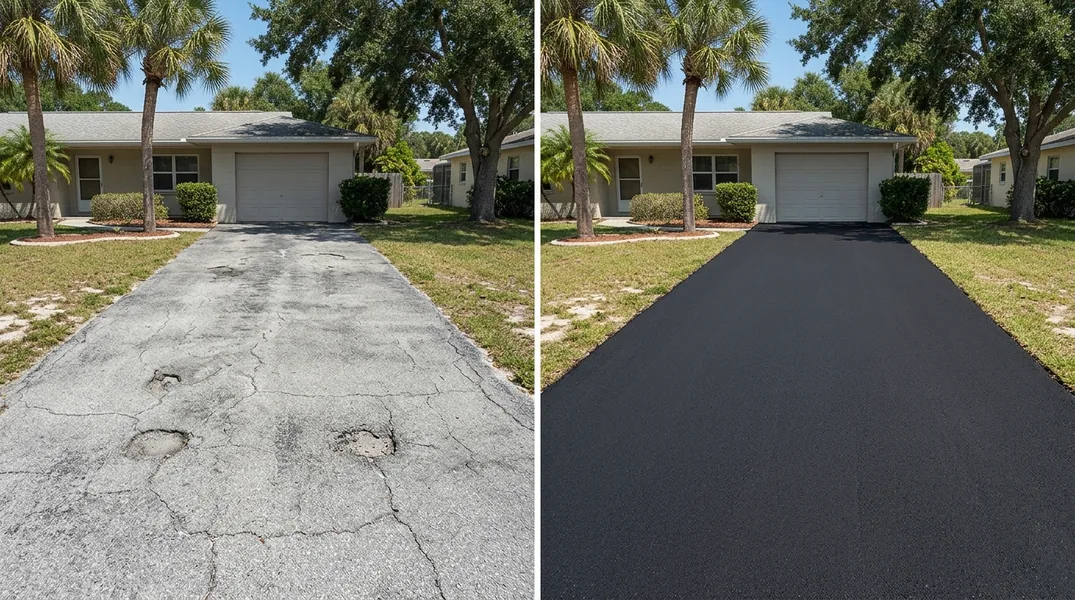
Conversely, routine Driveway Repair work, such as filling small cracks, seal coating, or patching isolated areas with Pothole Repair & Asphalt Patching, typically does not require a permit. The same applies to Asphalt Resurfacing & Overlay work where you are simply re-coating an existing driveway at the same dimensions and slope. When in doubt, contact the City of Daytona Beach Building Department or your local county office to confirm whether your specific project requires a permit before you begin any work.
Driveway Permit Cost and Application Process
The pricing for a driveway permit in Daytona Beach varies depending on the project scope and the jurisdiction handling the permit. Typically, permit fees range from $100 to $500 or more, though some jurisdictions charge based on the estimated project cost. The application process usually involves submitting a detailed site plan, a description of the work to be performed, proof of property ownership, and sometimes a professional survey. Processing times can range from one to four weeks, depending on how busy the permitting office is and whether your application requires revisions.
Many homeowners find that working with an established asphalt paving contractor simplifies the permit process. Professional paving companies often have relationships with local building departments and know exactly what documentation is needed. Some contractors will even handle the permit application on your behalf, ensuring all paperwork is correct and submitted properly. This service is invaluable if you are unfamiliar with local regulations or simply want to avoid the bureaucratic hassle. To learn more about how Daytona Beach Asphalt Paving can guide you through the permitting process, contact us at (386) 267-8085 or request a free estimate today.
Driveway Widening: Permit Requirements and Considerations
Driveway widening is one of the most common projects that triggers permit requirements in Daytona Beach. If you want to expand your driveway to accommodate additional vehicles or improve accessibility, the City or County will want to ensure that your wider driveway complies with local ordinances. Regulations typically limit how wide a driveway can be relative to your lot size, and there are often maximum coverage percentages that prevent driveways from consuming too much of your property. Additionally, if your driveway widening project extends closer to the street or property lines, setback requirements come into play.
Before widening your driveway, you should obtain a property survey to confirm exact lot lines and understand any restrictions in your deed or local zoning code. Some neighborhoods have homeowners' association rules that impose stricter limits on driveway dimensions than the City itself. A permit application for driveway widening must include a site plan showing the new dimensions, and the City will review it to ensure compliance. Once approved and the work is completed, an inspector will typically visit to verify that the finished driveway meets code. While this process takes time, it ensures your investment is legal and will not create disputes with neighbors or future title issues when you sell your home.
How to Get Started: Working with Daytona Beach Asphalt Paving
If you are planning any driveway project in Daytona Beach, the best first step is to consult with a qualified, local asphalt paving contractor. Daytona Beach Asphalt Paving has years of experience navigating local permitting requirements and building codes. Our team can assess your project, advise you on whether a permit is needed, and handle the application process if necessary. We work closely with the City and County to ensure all work meets code and passes final inspection, giving you peace of mind that your driveway investment is protected.
Whether you need a new driveway, driveway widening, or simply routine maintenance, we are here to help. Contact Daytona Beach Asphalt Paving today at (386) 267-8085 to discuss your project and receive a free estimate. Our experienced team will answer all your questions about permits, regulations, and pricing, so you can move forward with confidence.
Looking for a professional asphalt paving contractor in Daytona Beach? Daytona Beach Asphalt Paving responds fast for all your asphalt paving needs.
Get a Free Quote