The Daytona Beach Climate Challenge: Why Material Choice Matters
Living in Daytona Beach comes with unique environmental pressures that most homeowners don't fully appreciate until they're dealing with a damaged driveway. The combination of salt air from the Atlantic Ocean, sandy soil, intense UV radiation, and high humidity creates conditions that test the durability of any paving material. Your choice between asphalt and concrete isn't just about aesthetics or initial cost, it's about understanding which material will actually stand up to what Daytona Beach throws at it.
The salt air in coastal Florida is particularly aggressive. Salt particles travel inland and settle on surfaces, accelerating corrosion and degradation. Sand, which seems harmless, gets embedded in driveways and acts as an abrasive agent that wears down surfaces over time. When you combine these factors with the region's intense summer heat and occasional freeze-thaw cycles in winter, you're looking at a driveway that needs to be resilient. Understanding how asphalt and concrete respond to these conditions will help you make an informed decision that protects your investment for years to come.
Asphalt vs. Concrete Driveway: How Each Handles Salt and Sand
Asphalt and concrete respond very differently to the coastal environment. Asphalt is a flexible material composed of bitumen and aggregate, which gives it natural resilience against the freeze-thaw cycles that plague Florida's occasional winter dips. When temperatures fluctuate, asphalt expands and contracts without cracking, whereas concrete is rigid and prone to developing cracks when stressed by temperature changes. Additionally, asphalt's dark surface absorbs heat, which is beneficial in Florida's warm climate as it helps prevent water from pooling on the surface.
However, salt air and sand present different challenges for asphalt. While asphalt itself resists salt damage better than concrete, the material can soften slightly under extreme heat and may require more frequent maintenance to seal out moisture and salt infiltration. Concrete, on the other hand, is more porous than many homeowners realize. Salt water and sand penetrate the concrete's surface and reach the reinforcement steel beneath, causing it to rust and expand, which leads to spalling, cracking, and structural failure. Concrete driveways in coastal areas often fail prematurely because of this corrosion process, sometimes within 10 to 15 years rather than the often-quoted 30-year lifespan.
Asphalt Driveway Lifespan in Coastal Florida Conditions
The asphalt driveway lifespan in Daytona Beach typically ranges from 15 to 20 years with proper maintenance, though this can extend to 25 years or more if you're diligent about care. The key to maximizing your blacktop driveway's life is understanding that asphalt requires regular attention. This means sealcoating every two to three years to protect the surface from salt, UV rays, and moisture penetration. It also means addressing small issues like minor cracks or potholes quickly before they become major problems requiring expensive repairs.
Concrete driveways, by contrast, may last 25 to 30 years under ideal conditions, but in Daytona Beach's salt-laden environment, many homeowners find their concrete driveways deteriorating significantly after just 12 to 18 years. The initial advantage of concrete's longevity disappears when salt and sand accelerate the degradation process. When you factor in the cost of repairs and the frustration of dealing with expanding cracks and spalling concrete, asphalt often proves to be the more practical choice for coastal homeowners. The lower initial investment combined with predictable maintenance costs makes budgeting easier.
Can You Install Asphalt Over Concrete? A Practical Solution
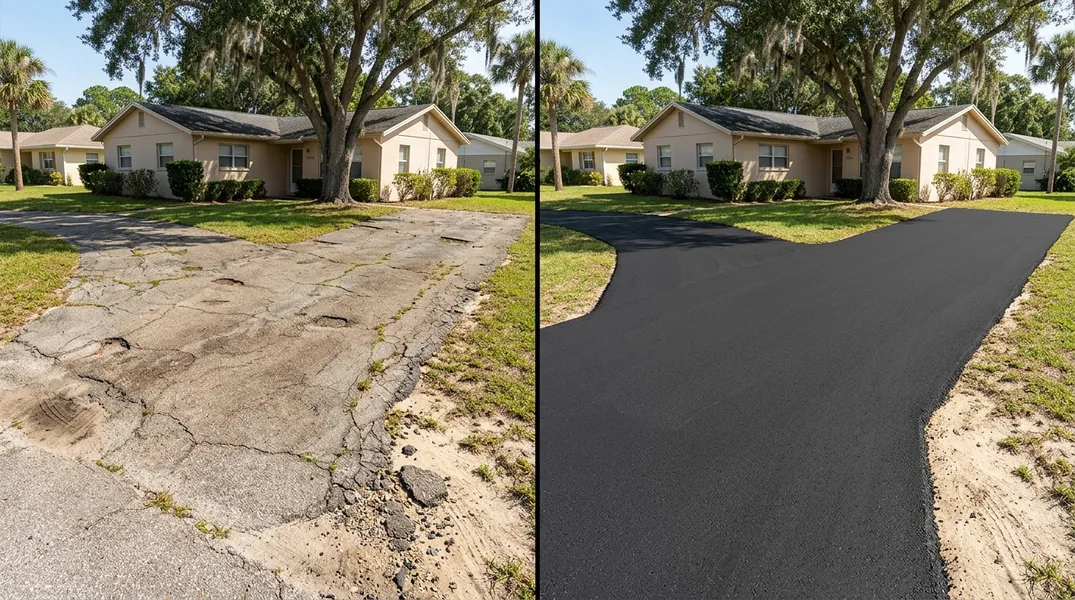
Many homeowners with aging concrete driveways ask whether they can simply pave over the existing surface with asphalt. The answer is yes, and asphalt over concrete driveway installation is a viable and often cost-effective solution. This approach, sometimes called an asphalt overlay, allows you to avoid the expense and hassle of removing the old concrete while still gaining the benefits of a fresh, durable asphalt surface. The existing concrete acts as a base, and the new asphalt layer provides a smooth, resilient driving surface.
However, success depends on the condition of the underlying concrete. If the concrete is severely cracked, heaving, or unstable, the asphalt overlay will eventually fail because it will follow the contours and movement of the damaged base. A professional assessment is essential before proceeding. If the concrete is relatively sound with only minor cracks, an overlay can extend the life of your driveway by another 10 to 15 years. This is an excellent option for homeowners who want to refresh their driveway without committing to a full replacement. For a thorough evaluation of whether your concrete is suitable for overlay, contact Daytona Beach Asphalt Paving at (386) 267-8085 to discuss your specific situation.
Maintenance Differences: Which Material Requires Less Work?
While asphalt requires more frequent maintenance than concrete, the maintenance is typically simpler and less expensive. A blacktop driveway needs sealcoating, crack filling, and occasional pothole repairs. These are straightforward tasks that cost far less than addressing structural concrete damage. Pothole Repair and Asphalt Patching are quick, affordable procedures that keep your asphalt in top condition. Many homeowners find that spending a few hundred dollars on preventive sealcoating every couple of years saves them thousands in major repairs down the line.
Concrete, while requiring less frequent maintenance initially, can develop costly problems that are difficult and expensive to fix. Once salt penetration causes reinforcement steel to rust and expand, the damage is often irreversible without complete replacement. Concrete also requires pressure washing and sealing to combat salt and sand damage, and these treatments are often less effective than asphalt sealcoating. Additionally, concrete stains easily and can become discolored from salt spray and sand, requiring cosmetic treatments that asphalt doesn't need. When you consider the total cost of ownership over 20 years, asphalt typically comes out ahead for coastal Florida homeowners.
Making Your Decision: Asphalt Driveway Paving and Installation Cost in Daytona Beach
Cost is often the deciding factor for homeowners, and asphalt generally wins on this front. The initial pricing for asphalt installation is typically 30 to 50 percent lower than concrete. For a standard two-car driveway, you can expect to pay significantly less upfront with asphalt, which allows you to invest those savings into proper maintenance. Over a 20-year period, the total cost of ownership for asphalt remains competitive with or lower than concrete when you factor in repairs and maintenance for both materials.
When comparing asphalt vs. concrete driveway options, it's important to consider not just the initial installation cost but also the long-term value. Asphalt's lower upfront cost, combined with predictable maintenance expenses and the ability to perform Asphalt Resurfacing and Overlay to extend the driveway's life, makes it an economical choice for most Daytona Beach homeowners. Concrete may seem like a money-saver initially, but the hidden costs of salt damage repair can quickly erase any savings. If you'd like a detailed cost breakdown for your specific driveway, reach out to Daytona Beach Asphalt Paving for a free estimate tailored to your needs.
Why Daytona Beach Homeowners Choose Asphalt
After weighing all the factors, it's clear why asphalt has become the preferred choice for driveways in Daytona Beach and throughout coastal Florida. Asphalt handles salt air and sand better than concrete, lasts a respectable 15 to 20 years with maintenance, costs less to install and repair, and offers flexibility for future upgrades like overlays or resurfacing. Concrete's rigidity and porosity make it vulnerable to the specific environmental stresses of the coast, leading to premature failure and expensive repairs that asphalt avoids.
The choice ultimately depends on your priorities, but for most homeowners in the Daytona Beach area, asphalt delivers superior performance and value. If you're ready to install a new asphalt driveway or upgrade an existing concrete surface, the team at Daytona Beach Asphalt Paving is ready to help. With years of experience serving the local community, we understand exactly what it takes to build a driveway that will withstand Daytona Beach's unique coastal environment. Call us today at (386) 267-8085 or visit our website to schedule your free estimate and take the first step toward a durable, beautiful driveway.
Looking for a professional asphalt paving contractor in Daytona Beach? Daytona Beach Asphalt Paving responds fast for all your asphalt paving needs.
Get a Free Quote